
Boat Detailing vs. Marine Protection Film: What Your Hull Actually Needs
Detailing fixes damage that already happened. Film stops it from happening.
Call (978) 543-5274If you're looking for a boat detailer, I'm not him — and I'll say so upfront so you don't waste a phone call. I install marine protection film. That's the whole business.
But it's worth understanding the difference before you spend money on either, because they solve opposite problems. Most boat owners have been paying for the first one every spring without ever being offered the second.
What boat detailing actually does
A good detailer compounds, polishes, and waxes your gelcoat back to looking new. Oxidation comes off. Swirl marks and light scratching get cut out. The boat looks the way it did the day you bought it.
It's real work and it's worth paying for. Two things are worth understanding about it:
- •It's subtractive. Compounding removes a thin layer of gelcoat every time it's done. There is a finite number of times a hull can be cut before you're into trouble — and nobody tells you which pass was the last safe one.
- •It's temporary. A season in a slip undoes it. That's why it shows up as an annual line item rather than a one-time fix.
Detailing is maintenance. It restores what's already been lost. It does nothing about what happens next season.
What marine protection film does
Film is a urethane layer applied over your gelcoat — a physical barrier, not a treatment or a polish. It's available in clear and in a range of colors. Clear goes over your existing finish without changing how the boat looks; colored film is a finish change that also protects. In either case, dock rash, fender wear, and abrasion from lines and pilings hit the film instead of your finish. It self-heals light scratching. It blocks UV, so the gelcoat underneath stops oxidizing in the first place.
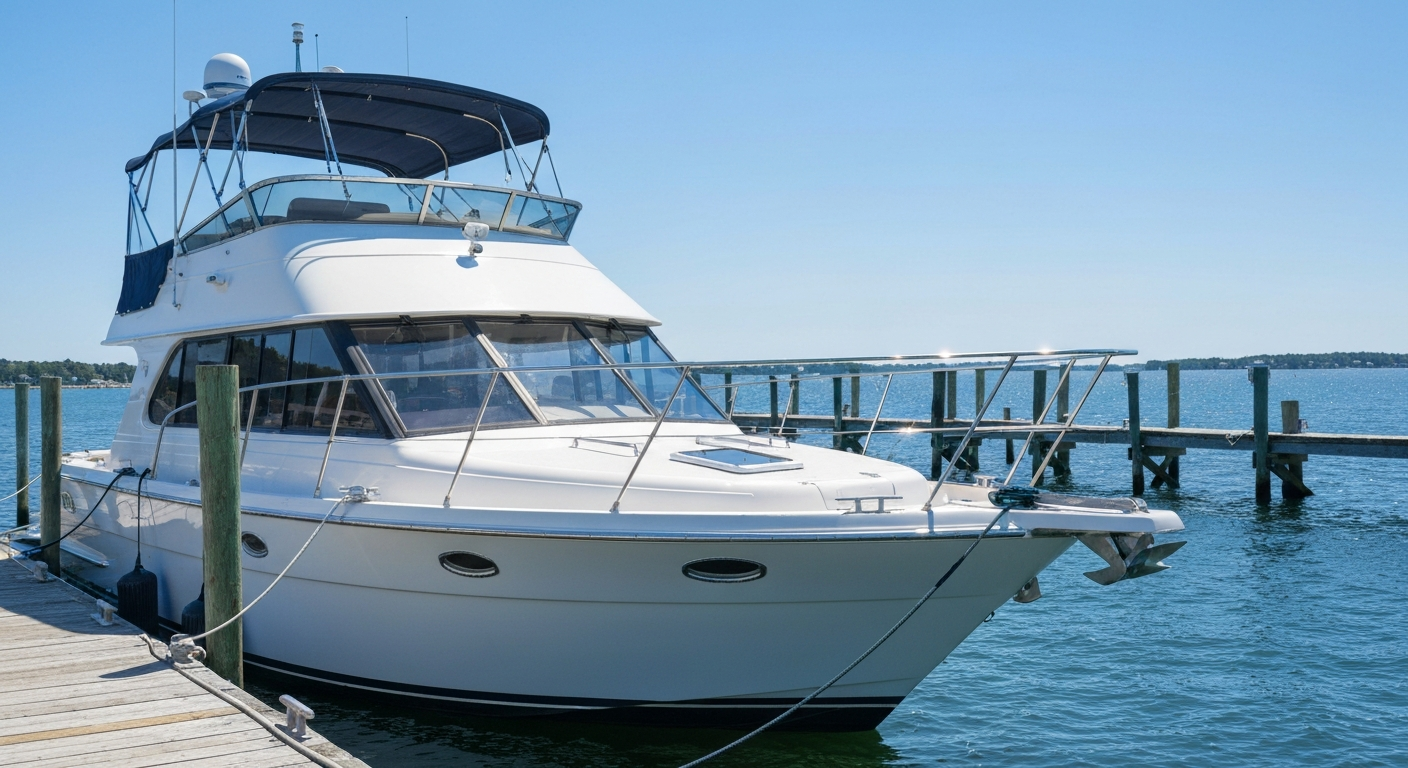
The gelcoat you have when the film goes on is the gelcoat you still have years later. That matters at resale, because a surveyor is looking at original finish — not a recent polish.
Side by side
| Boat Detailing | Protection Film | |
|---|---|---|
| What it does | Restores the finish | Prevents damage to it |
| Removes gelcoat | Yes, a little each time | No |
| Stops dock rash and impact | No | Yes |
| Stops oxidation | Slows it | Yes |
| Self-healing | No | Yes |
| How often | Every season | One install |
| Cost pattern | Recurring, forever | Up front, once |
Which one your boat needs
If your gelcoat is already oxidized, chalky, or dull, you need a detailer first. Film goes over the finish you have — it doesn't fix a finish that's already gone. Get the boat corrected, then protect it.
If your finish is still in good shape and you want it to stay that way, film is the move. Every season you detail instead is another pass of compound off a hull that only has so many left in it.
The sequence a lot of owners land on: correct it once, film the surfaces that actually take abuse — hullsides at the rub line, transom, covering boards, cockpit coamings — and stop paying to fix the same damage every spring.
What I do
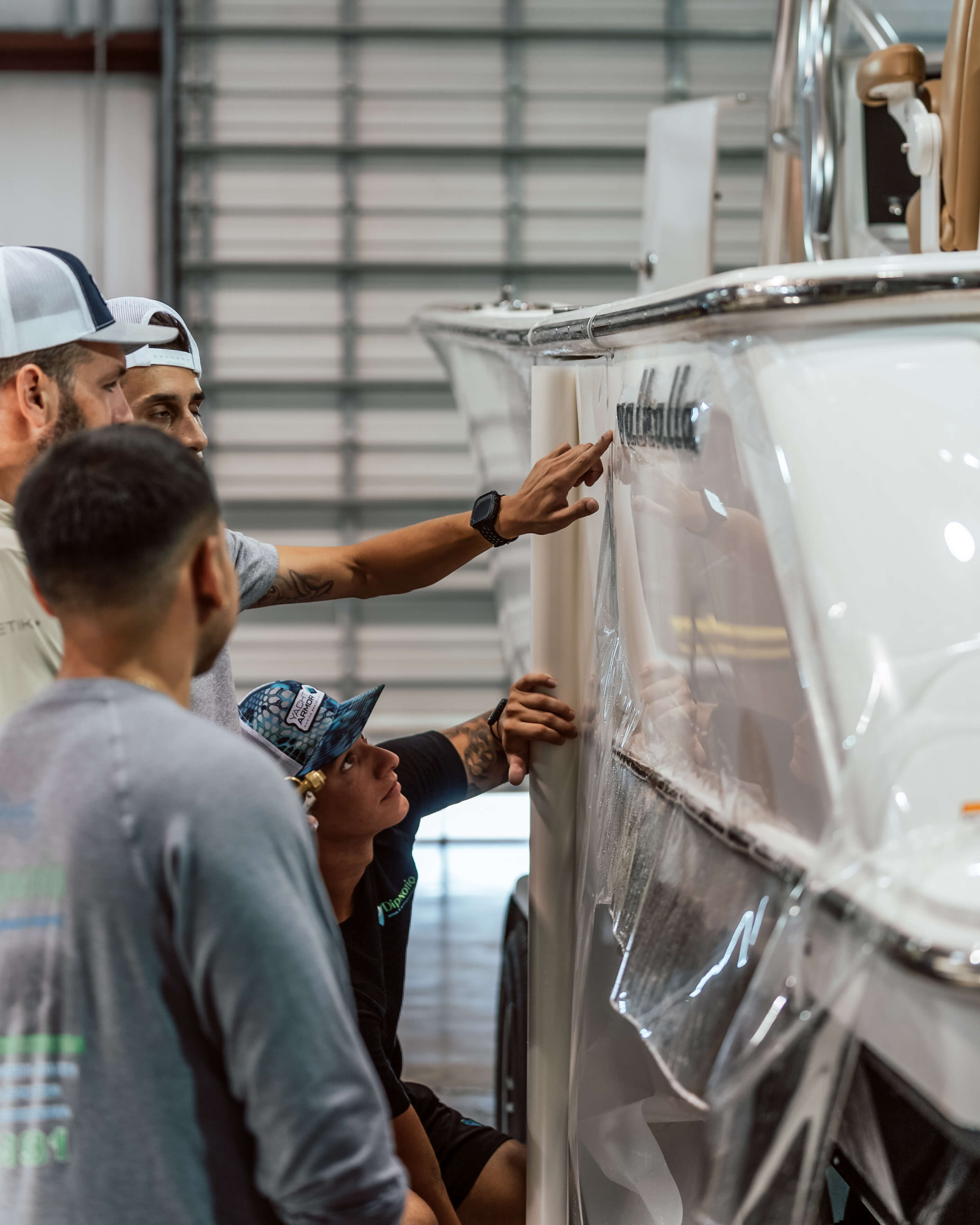
I'm a certified Yacht Armor installer working across New England — Massachusetts, New Hampshire, Rhode Island, and Cape Cod. I install film dockside at your slip or storage facility. Your boat never leaves the water.
I don't detail and I don't sell coatings. If that's what your boat needs right now, I'll tell you and point you toward someone who does it properly.
Common questions
Do you offer boat detailing?
No. I install Yacht Armor marine protection film only. If your hull needs correction before film goes on, I'll tell you at the inspection and you'll want a detailer for that part.
Does my boat need to be detailed before film goes on?
Sometimes. Film bonds to the surface underneath, so the gelcoat has to be sound and clean. I'll tell you at the inspection whether prep is needed and what it involves.
Will film mean I stop detailing every year?
On the filmed surfaces, largely yes — that's the whole point. Unfilmed areas still need normal upkeep.
Is detailing bad for my boat?
No, but it isn't free of cost either. Every compounding pass removes a small amount of gelcoat. Done every year for a decade, that adds up. Film is the way to stop the clock on that.
What about ceramic coating?
Different thing again — a chemical treatment that makes cleaning easier but doesn't stop physical damage. I compare coating and film directly on another page.
Do you come to my boat?
Yes. Everything I do is dockside at your slip or storage facility.
What does it cost?
Every hull is different, so I don't quote by phone or email. I look at the boat in person, then give you a number. Call and we'll set up a time.
Not sure what your hull needs?
Call and describe the boat — where it lives, how it's used, what shape the finish is in. I'll tell you straight whether film makes sense or whether you need correction first.
Call (978) 543-5274