Boat Ceramic Coating vs. Marine Protection Film: What Actually Protects a Hull
One makes your hull easier to keep clean. The other stops it from getting damaged in the first place.
Call (978) 543-5274Most boat owners come to me asking about boat ceramic coating. It's the term the industry has spent a decade marketing, so it's the one people know. Fair enough.
Here's the straight version: ceramic coating and marine protection film do genuinely different jobs. Coating is a chemical treatment. Film is a physical barrier. One makes your hull easier to keep clean. The other stops it from getting damaged in the first place. Which one you want depends entirely on what you're actually worried about.
I install marine protection film. I don't sell ceramic coating, which means I have no reason to talk you out of it — so what follows is what each one does, without the pitch.
If you're comparing marine ceramic coating against film for a boat that lives in the water, the short answer is at the bottom of this page — but the reasoning matters more than the verdict.
What marine ceramic coating actually does
A ceramic coating is a liquid polymer applied to your gelcoat that cures into a hard, hydrophobic layer. Measured in microns — thinner than a sheet of paper.
What it does well:
- •Water beads and sheets off instead of sitting on the surface
- •Salt, grime, and waterline scum release more easily during washdowns
- •Gloss looks deeper and holds longer than wax
- •Some UV resistance, reducing the rate of oxidation
- •Meaningfully less time spent cleaning
What it does not do:
- •Stop dock rash, fender scuffs, or contact damage
- •Resist abrasion from lines, pilings, or a boat hook
- •Prevent chips from debris or hardware
- •Self-heal — once it's scratched, the scratch is permanent
- •Last indefinitely; it degrades and needs reapplication
A ceramic coating is a maintenance product. It changes how often you wash the boat and how good it looks doing it. It does not change what happens when a piling finds your topsides.
What marine protection film does
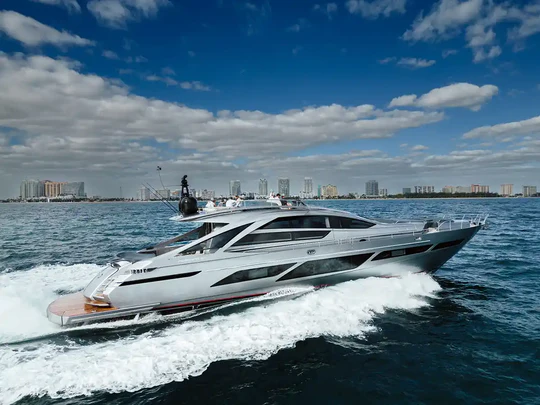
Protection film is a urethane layer applied over your gelcoat — measured in mils, not microns. Orders of magnitude thicker than a coating. It's a physical barrier, not a chemical treatment.
What it does:
- •Absorbs impact and abrasion that would otherwise reach your gelcoat
- •Takes dock rash, fender wear, and contact damage instead of your finish
- •Self-heals light scratching and swirl marks
- •Blocks UV, slowing oxidation and fade underneath
- •Preserves the original gelcoat, which is what a surveyor and a buyer are actually looking at
The trade-offs, honestly:
- •Higher up-front cost than a coating
- •Skilled installation — a bad install looks worse than no film
- •Applied to specific surfaces, not the entire vessel
- •Removable, but that's a job, not a weekend project
Yacht Armor publishes its own warranty on the film. Separately, I guarantee my workmanship for as long as you own the boat — lifts, peels, and seam separation caused by installation. I'll walk you through both when I look at the vessel.
Side by side
| Ceramic Coating | Protection Film | |
|---|---|---|
| What it is | Chemical treatment | Physical barrier |
| Thickness | Microns | Mils |
| Easier cleaning | Yes | Yes |
| Gloss retention | Yes | Yes |
| UV / oxidation resistance | Partial | Yes |
| Dock rash & impact | No | Yes |
| Abrasion from lines & fenders | No | Yes |
| Self-healing | No | Yes |
| Coverage | Whole hull | Targeted surfaces |
| Up-front cost | Lower | Higher |
I go deeper on this in my write-up on ceramic coating versus protection film.
What hull protection actually means
Boat hull protection is a category, not a product. It covers everything from a coat of wax to a full film install, and the word gets used loosely enough that it's worth being specific about what you're actually buying.
Wax and sealants are cosmetic. They last weeks to months and do nothing structural.
Ceramic coating is chemical. It bonds to the gelcoat, sheds water, and slows oxidation. It does not stop physical contact.
Protection film is structural. It's a urethane layer thick enough to absorb what would otherwise reach your hull — pilings, fenders, lines, debris. On a boat that lives in a slip, that's the only category of hull protection that addresses what actually damages the finish.
If someone quotes you "hull protection" without telling you which of the three they mean, ask.
Which one makes sense for your boat
Ceramic coating is probably enough if: your boat is trailered or lifted, lives under cover, sees light seasonal use, and your main complaint is how long washdowns take. You're solving a cleaning problem, and a coating solves cleaning problems.
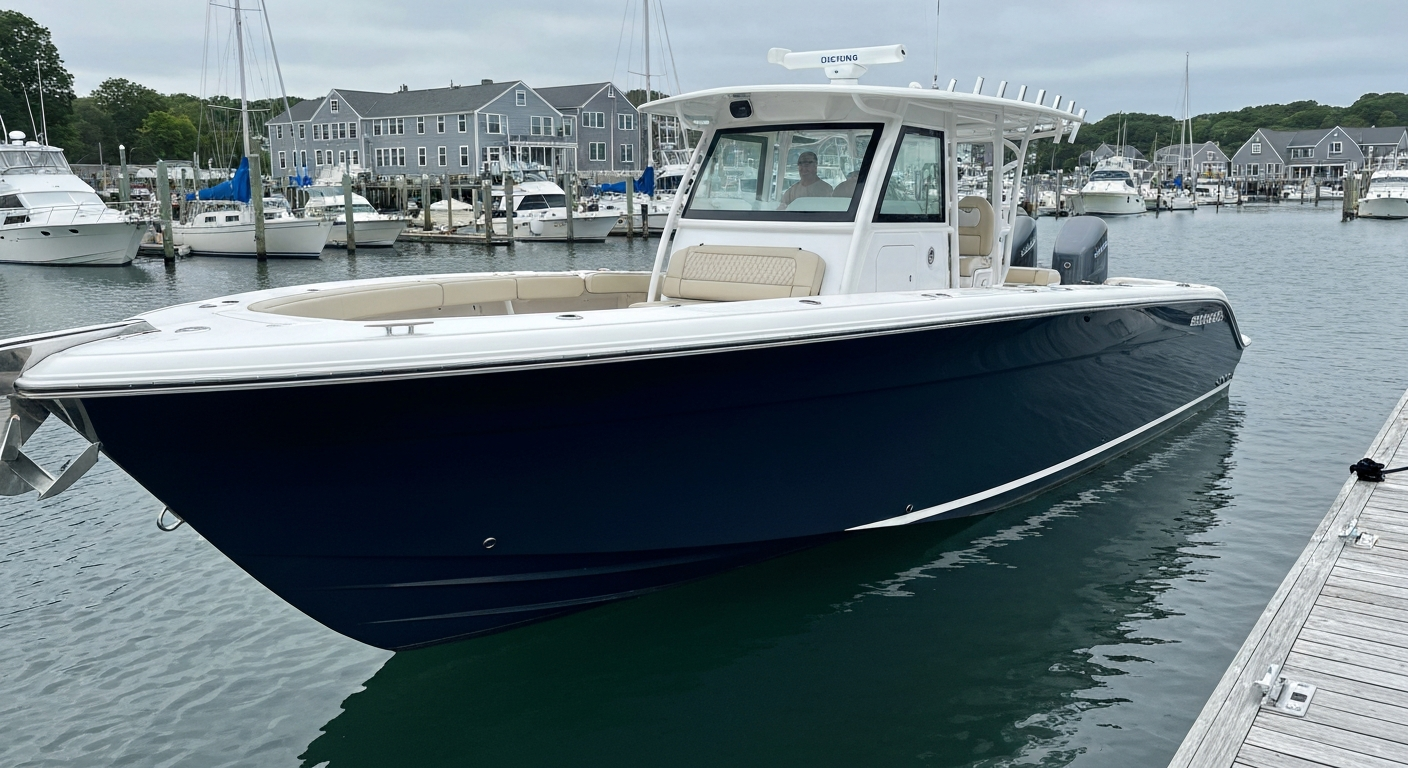
Film is the answer if: your boat lives in a slip, takes fenders and pilings regularly, has dark or metallic gelcoat that shows every mark, or represents enough money that resale value is a real consideration. You're solving a damage problem, and a coating doesn't solve damage problems.
The case a lot of owners land on: film on the surfaces that take abuse — hullsides at the rub line, transom, covering boards, cockpit coamings — and conventional maintenance everywhere else. You're not filming the whole boat. You're protecting the parts that actually get hit.
Detailing is the third option people weigh — I compare boat detailing against film separately.
Why I install film
I'm a certified Yacht Armor installer working across New England. I chose film over coatings because of what I kept seeing on boats that had been coated: beautiful gloss, easy to wash, and gelcoat underneath still marked up from a season in a slip. The coating was doing exactly what it promised. It just wasn't the thing those owners actually needed.
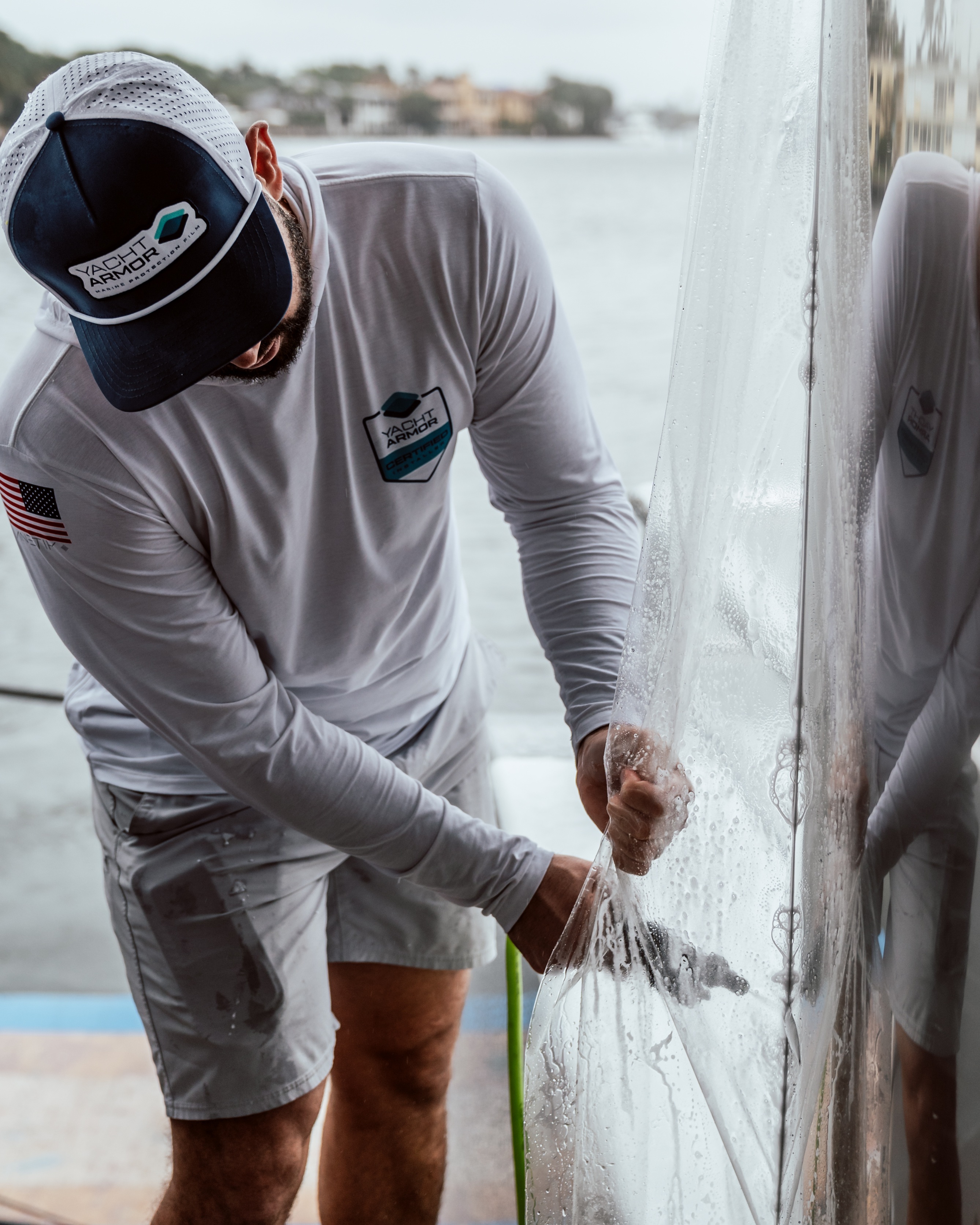
I work dockside. Your boat never leaves the slip. Every install is measured in person, because custom hulls have no shortcut and there's no honest way to quote one from a photo.
Common questions
Can I put film over an existing ceramic coating?
Not directly. The coating has to come off first so the film bonds to gelcoat. It's part of surface prep and it's not a reason to avoid film — just something to know if your boat was coated recently.
Is film going to change how my boat looks?
Only if you want it to. Clear film goes over your existing finish and is effectively invisible from a few feet away. The film also comes in colors if a finish change is what you're after. I bring samples to every inspection so you can see the options against your own gelcoat.
How long does it last?
Longer than a coating, and Yacht Armor warrants the film itself — I'll give you their current terms in writing at the inspection rather than a number off the top of my head. What I'll tell you now is that service life depends heavily on where the boat lives and how it's used, which is exactly why I look at the vessel before saying anything specific.
Do you offer ceramic coating too?
No. I install Yacht Armor marine protection film — that's the whole business. If a coating is genuinely the right call for your boat, I'll tell you that and point you toward someone who does it well.
Do you come to my boat?
Yes. Everything I do is dockside at your slip or storage facility. Your boat doesn't leave the water.
What does it cost?
Every hull is different, so I don't quote by phone or email. I look at the boat in person, then give you a number. Call and we'll set up a time.
Not sure which one your boat needs?
Call me and describe the boat — where it lives, how it's used, what's already happened to the finish. I'll tell you straight whether film is worth it or whether you'd be better served by a coating from someone who specializes in it.
Call (978) 543-5274